
Applies to: OpsLogix VMware Management Pack (all versions) · SCOM 2019, 2022, 2025 · vCenter 7.0, 8.0, 9.0
Last updated: October 2026 · Reading time: 4 minutes
Symptom
SCOM raises the alert OpsLogix VMware license is not valid. VMware objects may disappear from SCOM, and VMware monitors and performance rules stop getting data.
The alert comes from the monitor OpsLogix VMware check if the license is still valid. It runs once a day on each OpsLogix VMware Collector Service, the collector on each server in the VMware resource pool. It's Critical when the collector reports that the license isn't valid, and Warning when it gets no valid answer, for example because the collector service isn't running.
Why objects disappear
While the license isn't valid, the collector refuses the requests of the VMware workflows. Monitoring stops, and the discoveries remove the VMware objects from SCOM. The Operations Manager event log on the pool member shows There was an issue with the license. Triggering undiscovery. After you fix the license, the objects come back at the next discovery.
Find the cause
- In the Monitoring workspace, go to OpsLogix > VMware > VMware Collector > State VMware Collector Service.
- Select the collector service on a server in the resource pool and open Health Explorer.
- Select the monitor OpsLogix VMware check if the license is still valid and open the State Change Events tab. Select the newest event: its details contain the message from the collector. The tab is empty if the monitor never changed state.
You also find the message in the Operations Manager event log on each server in the resource pool, as a critical event from source OpsLogix IMP VMware, logged every time a VMware workflow is refused.
| Message | Meaning | What to do |
| No license was found. | The collector on this server has no license key. | Import the key, then click Update on the Assign tab (step 2 below). This sends the key to every collector. |
| Management group missmatch Management group wildcard check failed |
The key was issued for another SCOM management group. | Request a key for the name of this management group. |
| License expired | The key's expiration date has passed. | Get a new key (step 1). |
| Product missmatch | The key is for another OpsLogix product. | Import your VMware Management Pack key. |
| License type mismatch. The imported VMware license key is a legacy key. … | The key is in an old format. | Download a new key from portal.opslogix.com. |
| License version mismatch. The imported VMware license only targets version … or lower. … | A key is valid up to a version of the management pack. You upgraded to a newer version than the key covers. | Download a key for the new version from portal.opslogix.com, or contact OpsLogix sales. |
| No license assignment has been configured. … | No ESXi host has a license assigned. | Assign licenses on the Assign tab (step 2). |
| The current license assignment socket count is higher than the allowed license count. … | More CPU sockets are assigned than the key allows. | Remove hosts on the Assign tab, or buy more licenses. |
If the monitor is in Warning without one of these messages, check first that the Opslogix VMware Collector Service is running on that server. See VMware MP Collector service crashes and objects are undiscovered.
Resolution
Step 1: Import a new key, if you need one
- Go to Administration > OpsLogix Licensing > OpsLogix Licensing Dashboard. On the Keys tab, check the License Count (licensed CPU sockets) and the Expiration Date of the VMware key.
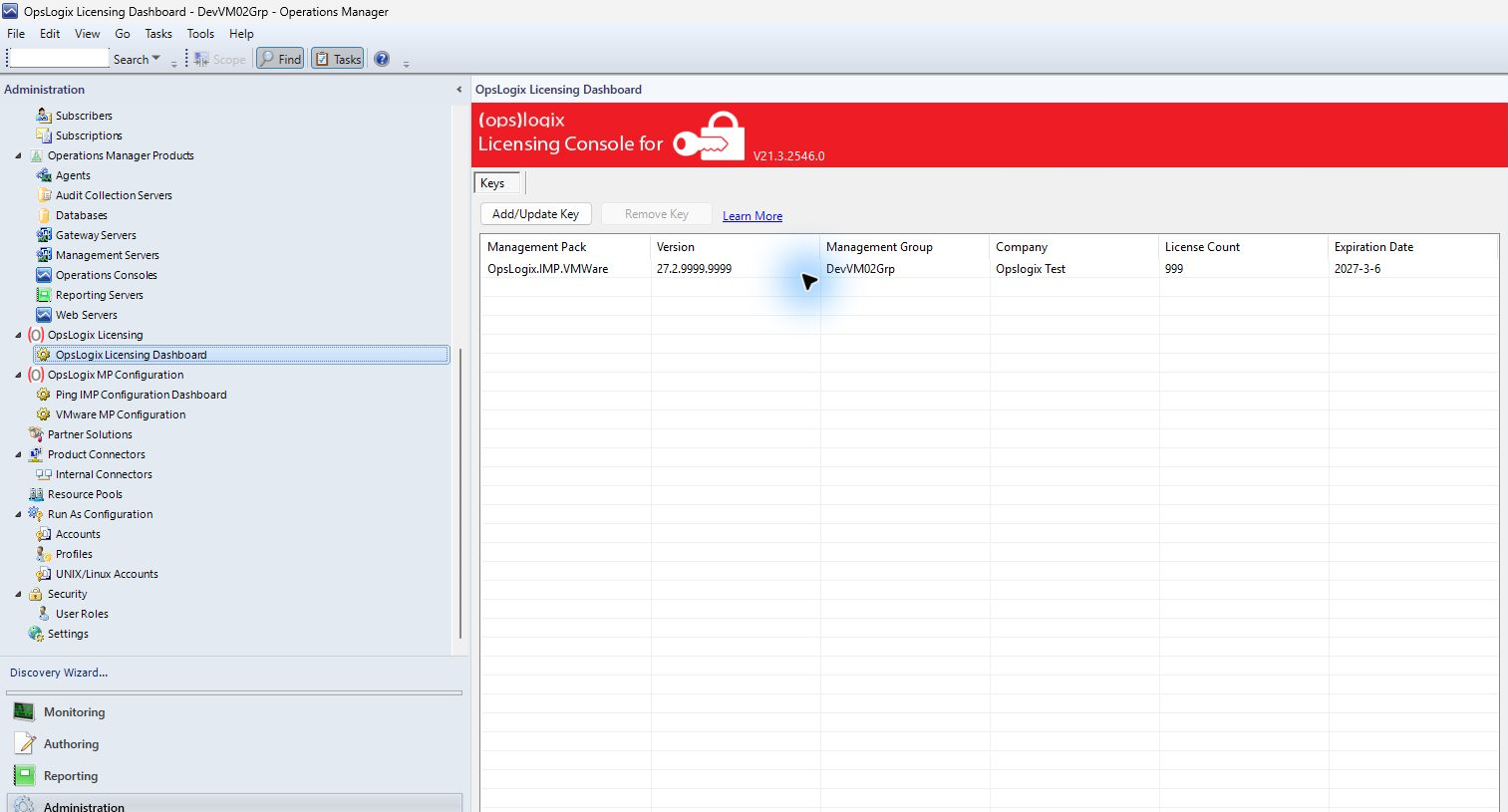
- To import a new key, click Add/Update Key, paste the key into the License key box and click Add/Update. See Import the VMware MP license key.
Step 2: Update the license assignment
Don't skip this step. It sends the key and the host assignment to the collector on every server in the resource pool.
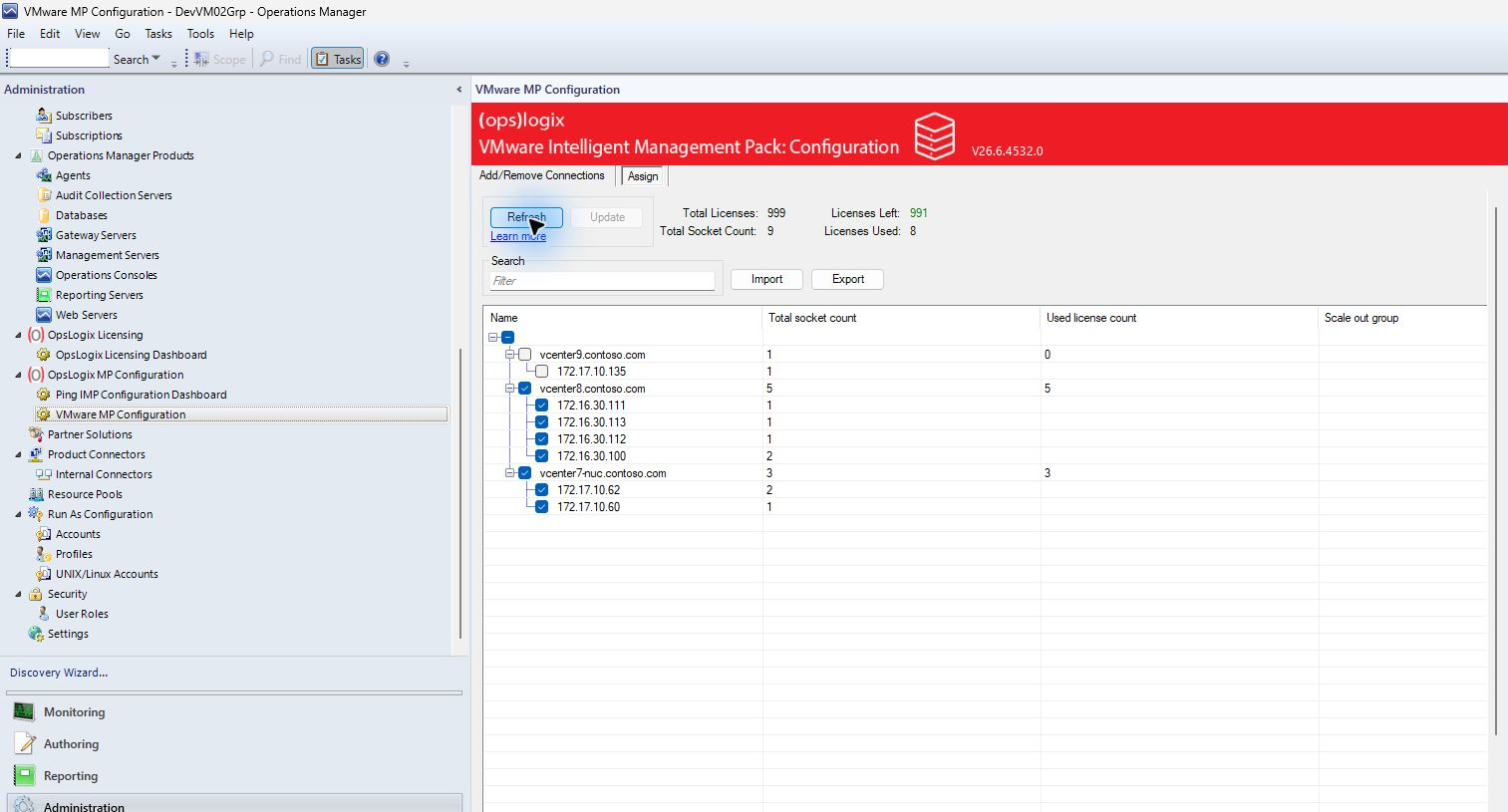
- Go to Administration > OpsLogix MP Configuration > VMware MP Configuration and open the Assign tab.
- Click Refresh and wait until the host list appears.
- Check the selected hosts and the totals. Update becomes available after you change a selection; if you don't want to change anything, clear one host and select it again.
- Click Update. All servers in the resource pool must be available.
Verify it worked
The monitor checks the license once a day, so the alert can stay open for up to 24 hours after the fix. You can close the alert yourself; if the license is still not valid, it comes back at the next check.
VMware objects that were removed come back at the next discovery, which can take several hours. To speed this up, see How long does VMware discovery take?
If the alert comes back after these steps, contact OpsLogix support.
See also
- Import the VMware MP license key
- Assign VMware MP licenses to ESXi hosts
- How is the VMware Management Pack licensed?
- Count the CPU sockets in your VMware environment